
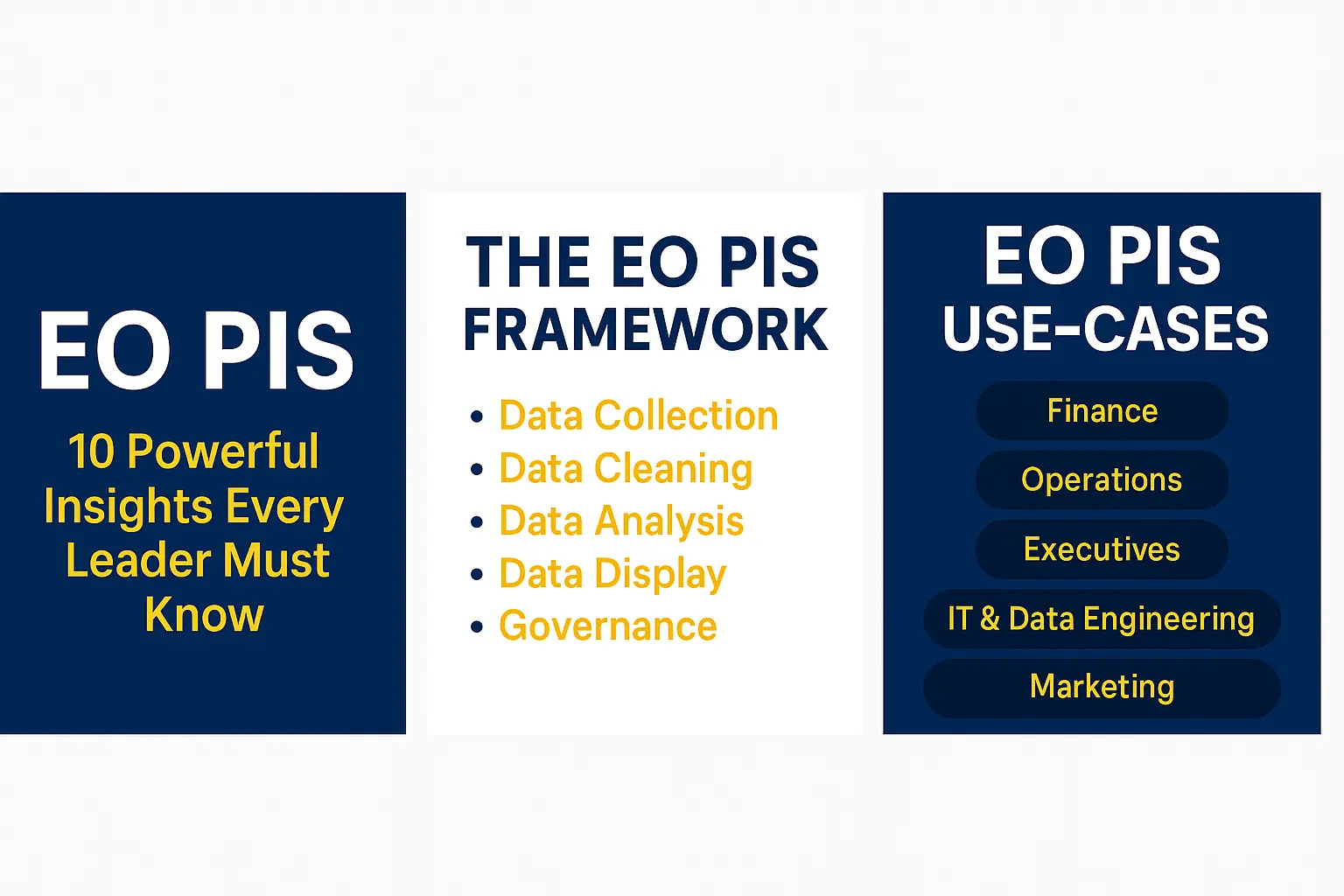
Businesses today collect more data than ever before. But having a lot of data does not always mean having clear answers. Many leaders, managers, and teams need a way to see important information quickly and make better decisions. This is why EO PIS has become an important term in many industries. EO PIS has more than one meaning, and each meaning is used in a different area. But all versions share the same idea: EO PIS helps people understand information in a simple, organized, and useful way. In this guide, you will learn what EO PIS means, how it works, where it is used, and why it is becoming more important. All wording is kept simple so everyone can understand.
What EO PIS Means
EO PIS is used in these three main ways:
1. Executive Operations Performance Indicator System
This meaning is used by business leaders. It is a system that shows important business numbers and performance indicators on one screen or dashboard.
It helps leaders:
-
See how the business is doing
-
Find problems early
-
Track progress toward goals
-
Save time by avoiding manual reports
This version of EO PIS is like a control center for business performance.
2. End-of-Period / End-of-Process Information System
This meaning is used in finance, operations, and IT. It is a system used at the end of a time period (week, month, quarter, year) or at the end of a process.
It is used for:
-
Month-end or year-end close
-
Checking and cleaning data
-
Creating financial reports
-
Making sure everything is correct and ready for audit
This version focuses on accuracy and data checks.
3. Enhanced Online Personalization Interface
This meaning is used in marketing, websites, apps, and user experience.
It is a system that changes content based on what a user likes or does.
Examples:
-
Product suggestions on shopping sites
-
Personalized news feeds
-
Custom recommendations
This version helps improve user engagement and satisfaction.
See More: Mike Wolfe’s Passion Project: Saving America’s History in Simple Ways
EO PIS Meaning Comparison
| EO PIS Meaning | Who Uses It | Main Purpose | Key Benefit |
|---|---|---|---|
| Executive Operations Performance Indicator System | Executives, managers | View business performance | Better decision-making |
| End-of-Period / Process Information System | Finance, operations, IT | End-of-cycle reporting | Accurate and clean data |
| Enhanced Online Personalization Interface | Marketers, UX, website teams | Personalized content | Higher user engagement |
Why EO PIS Is Important
EO PIS is becoming important because businesses need faster and clearer information. Without EO PIS, many teams spend hours creating reports or searching for answers.
EO PIS solves many problems:
-
Too much data in different places
-
Confusing reports
-
Slow decision-making
-
Lack of visibility
-
Manual work and errors
-
Poor user experience online
Key benefits of EO PIS:
-
Easy access to important information
-
Faster and better decisions
-
Better communication between teams
-
Less manual work
-
More accurate and clean data
-
Improved user experience (for websites and apps)
How EO PIS Works (Simple Framework)
EO PIS systems usually follow the same steps or layers, no matter which meaning you use.
1. Data Collection
The system gathers data from different sources, such as:
-
Sales systems
-
Finance reports
-
HR systems
-
User behavior on websites
-
Operational logs
2. Data Cleaning and Checking
Before data is used, it must be clean.
This step includes:
-
Fixing errors
-
Removing duplicates
-
Checking numbers
-
Making sure data follows rules
3. Data Analysis
The system calculates:
-
Trends
-
KPIs
-
Variances
-
Forecasts
-
Predictions
This is where the system “thinks.”
4. Data Display
The EO PIS shows data in simple ways, such as:
-
Dashboards
-
Tables
-
Graphs
-
Personalized screens
-
Reports
The goal is to make information clear and easy to understand.
5. Governance and Security
EO PIS keeps data safe by using:
-
Access controls
-
Audit logs
-
Tracking changes
-
Protecting sensitive information
See More: Sankkucomplex: A Simple Guide to Its Meaning, Feelings, Culture, and Uses
Common EO PIS KPIs and Metrics
Executive KPIs
-
Revenue
-
Profit margins
-
Operating costs
-
Customer satisfaction
-
Growth metrics
Financial Close Metrics
-
Days to close the month
-
Number of corrections needed
-
Reconciliation accuracy
-
Period-to-period comparison
Operational Metrics
-
Production speed
-
Order completion time
-
Inventory levels
-
Machine downtime
Personalization Metrics
-
Click-through rate
-
Engagement
-
Conversion rate
-
Recommendation success
How to Implement EO PIS
Here are the basic steps to follow:
Step 1: Set Clear Goals
Decide what you want EO PIS to do:
-
Help leaders see performance?
-
Improve financial close?
-
Personalize user experience?
Step 2: Identify Data Sources
List where your data comes from:
-
Systems
-
Files
-
Teams responsible
-
Quality level
Step 3: Pick the Right Tools
You can use:
-
BI tools: Power BI, Tableau
-
Data platforms: BigQuery, Snowflake
-
Pipelines: Airflow, Fivetran
-
Personalization tools: Optimizely, Adobe Target
Choose simple tools that match your needs.
Step 4: Build Data Pipelines
A good pipeline:
-
Runs automatically
-
Checks for errors
-
Loads data on time
-
Can grow with your business
Step 5: Create Dashboards or Interfaces
Tips for good dashboards:
-
Keep it simple
-
Use clear charts
-
Show only what matters
-
Make different views for different roles
Step 6: Test and Improve
Check with users to see:
-
Is data correct?
-
Is the dashboard easy to understand?
-
Are the results helpful?
Then make updates as needed.
EO PIS Use-Cases in Different Industries
Finance
-
Faster month-end closing
-
Error-free reports
-
Better compliance
-
Clear financial summaries
Operations
-
Track production levels
-
Find delays
-
Improve supply chain flow
-
Reduce waste
Executives
-
View overall business health
-
Track key goals
-
Predict future risks
-
Align teams
IT and Data Engineering
-
Monitor data jobs
-
Track system performance
-
Manage pipelines
-
Solve data problems faster
Marketing and UX
-
Show personalized messages
-
Improve customer engagement
-
Understand user journeys
-
Increase conversions
Human Resources
-
Track employee data
-
View performance indicators
-
Improve HR planning
-
Manage compliance
Challenges When Using EO PIS
Even good systems face problems.
Common challenges include:
-
Poor data quality
-
Data from too many sources
-
Different KPI definitions
-
Hard-to-use dashboards
-
Privacy concerns
-
Not enough training for users
Best Practices for EO PIS
To get the best results, follow these simple tips:
EO PIS Best Practices
-
Automate as much work as possible
-
Keep dashboards clean and simple
-
Review KPIs often
-
Use one shared definition for each KPI
-
Protect user privacy
-
Teach users how to read and use dashboards
-
Use AI for predictions (optional, but helpful)
The Future of EO PIS
As technology grows, EO PIS will become even more powerful.
Here are trends to watch:
Future Features
-
Real-time alerts and warnings
-
Automatic insights created by AI
-
Self-correcting data quality
-
Personalized dashboards for every role
-
Voice or chat-based data queries
-
Smarter predictions
EO PIS will change from a simple reporting tool into an intelligent system that helps businesses run smoothly every day.
Conclusion
EO PIS is an important system for many industries. Whether it is used for executive dashboards, period-end reporting, or personalized user experiences, EO PIS helps turn data into clear and helpful information.
By following simple steps and best practices, any business can build an EO PIS that improves decision-making, reduces errors, saves time, and creates better experiences for both teams and customers.
