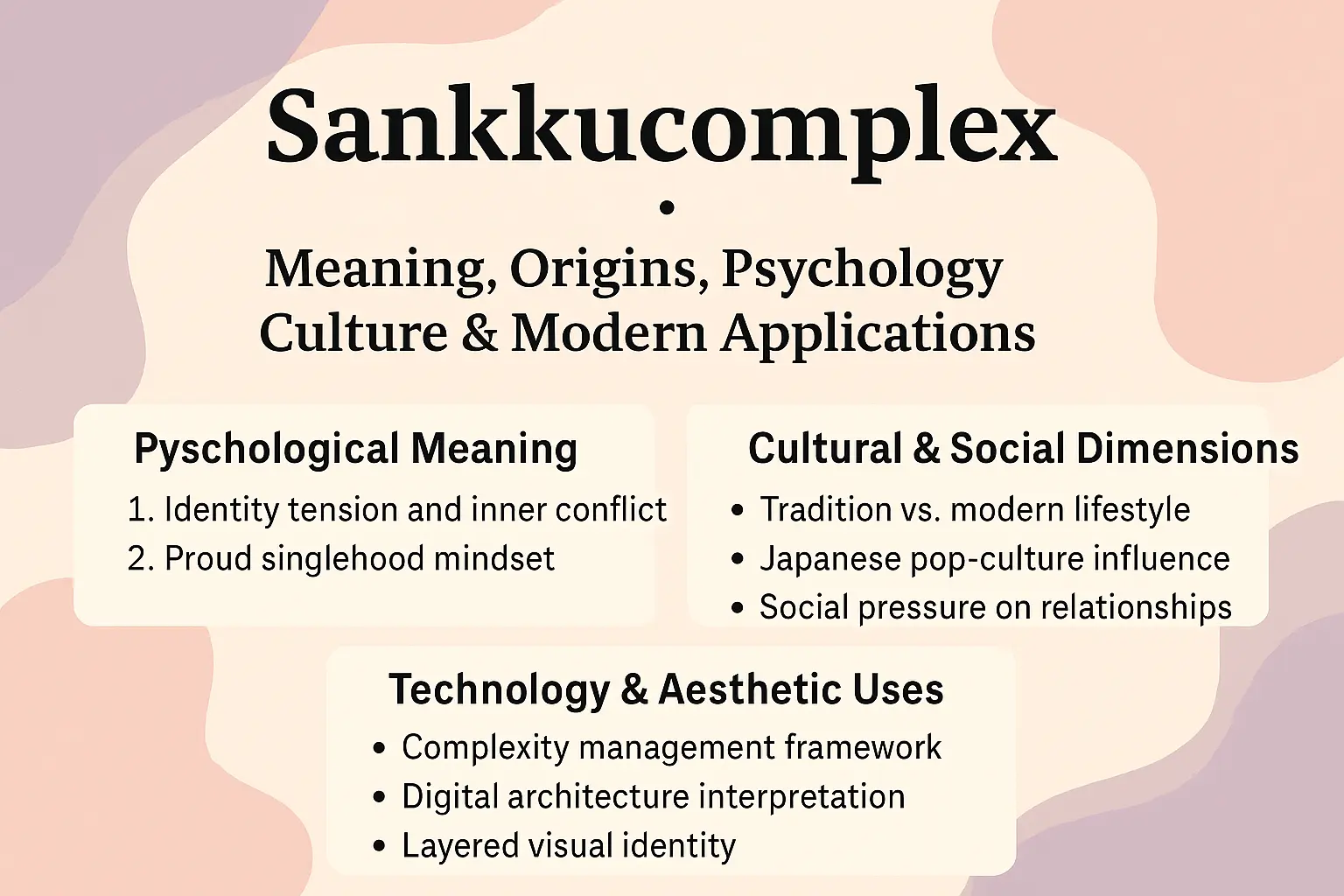
Unlike traditional psychological terms, Sankkucomplex does not come from a single theory or academic source. Instead, it has evolved organically across internet culture, youth discussions, and even technology spaces.
At its core, Sankkucomplex represents one simple idea:
The challenge of managing complexity in modern life: emotionally, socially, and digitally.
What Is Sankkucomplex?
Sankkucomplex refers to a state of mixed emotions, conflicting choices, or layered identity experiences that feel difficult to balance.
It is used in multiple contexts:
- Psychology: Inner conflict and emotional complexity
- Lifestyle: Choosing independence or singlehood
- Culture: Tradition vs modern expectations
- Aesthetic: Emotion-driven visual expression
- Technology: Managing complex systems and information
Even though these meanings vary, they all connect through one theme living with complexity rather than avoiding it.
Psychological Meaning of Sankkucomplex
1. Feeling Stuck Between Two Worlds
Many people experience Sankkucomplex as a feeling of being pulled in different directions.
For example:
- Personal dreams vs family expectations
- Past identity vs future goals
- Stability vs freedom
Common signs include:
- Overthinking decisions
- Fear of disappointing others
- Difficulty choosing life direction
- Desire for change but fear of risk
2. Choosing Singlehood by Choice
Another widely used meaning of Sankkucomplex is intentional single living.
Instead of following traditional relationship timelines, some individuals choose independence.
Why people make this choice:
- Focus on career or personal growth
- Desire for freedom and flexibility
- Avoiding social pressure
- Prioritizing mental well-being
Benefits:
- Greater self-development
- Control over life decisions
- Reduced emotional stress
Challenges:
- Social misunderstanding
- Occasional loneliness
- Family expectations
3. Nostalgia and Emotional Blending
Sankkucomplex also describes mixed emotional states, especially nostalgia.
People may feel:
- Happy remembering the past
- Anxious about the future
- Confused about the present
Common triggers:
- Old music or photos
- Childhood places
- Personal memories
Cultural and Social Dimensions
1. Tradition vs Modern Life
In many societies, individuals face pressure to follow traditional paths while also wanting modern freedom.
Examples include:
- Marriage expectations vs career goals
- Cultural values vs personal identity
- Social norms vs self-expression
This ongoing tension is a key part of Sankkucomplex.
2. Influence of Digital and Youth Culture
Online communities have shaped how Sankkucomplex is expressed.
It is often connected to:
- Creative digital identities
- Online communities and fandoms
- Emotional storytelling through content
- Escaping stress via virtual spaces
3. Relationship Pressure in Society
Many people use the term to describe pressure to:
- Be in a relationship
- Marry at a certain age
- Follow a “standard” life path
In response, individuals:
- Redefine success
- Delay traditional milestones
- Focus on personal growth
Sankkucomplex in Technology
1. A Mindset for Managing Complexity
In tech and productivity discussions, Sankkucomplex represents the ability to handle complex systems effectively.
This includes:
- Managing multiple tools and platforms
- Handling large amounts of information
- Staying organized in fast-paced environments
2. A Structured Approach to Work
It also describes systems that simplify complexity.
Key principles:
- Break tasks into smaller steps
- Connect tools efficiently
- Create structured workflows
Applications:
- Software development
- Digital marketing campaigns
- Team collaboration
- Creative project management
Sankkucomplex in Aesthetic and Style
Sankkucomplex has also become a visual and emotional style.
Key features:
- Soft or pastel colors
- Layered outfits symbolizing emotions
- Cultural blending
- Artistic self-expression
This aesthetic reflects inner complexity through outward appearance.
Common Causes of Sankkucomplex
Despite its different meanings, the root causes are similar:
Psychological Factors
- Stress and anxiety
- Identity confusion
- Fear of judgment
Cultural Factors
- Changing traditions
- Generational differences
- Global influence
Technological Factors
Social Factors
- Relationship expectations
- Social media comparison
- Desire to belong while staying unique
How to Recognize Sankkucomplex
| Area |
Signs |
| Emotions |
Confusion, nostalgia, inner conflict |
| Culture |
Clash between tradition and modern life |
| Relationships |
Choosing independence or resisting pressure |
| Technology |
Creating systems to manage complexity |
| Lifestyle |
Non-traditional life choices |
| Social Behavior |
Seeking online communities for comfort |
How to Manage Sankkucomplex
1. Personal Life
- Understand your emotions clearly
- Set boundaries with others
- Accept that your path can be different
2. Creative Expression
- Use emotions as inspiration
- Combine past experiences with future ideas
- Express identity through art or content
3. Technology Use
- Simplify your tools
- Focus on essential systems
- Organize your digital environment
4. Lifestyle and Culture
- Balance tradition with personal freedom
- Avoid unnecessary comparison
- Build a lifestyle that fits your values
The Future of Sankkucomplex
As society evolves, Sankkucomplex is likely to become more relevant because:
- Identity is becoming more fluid
- Technology is increasing complexity
- Younger generations are redefining norms
- Global culture continues to merge ideas
It may eventually be recognized as a broader concept in:
- Psychology
- Digital lifestyle studies
- Cultural analysis
Conclusion
Sankkucomplex is more than just a trending word. It reflects the real challenges of modern life, where people navigate emotions, expectations, and identity all at once.
Whether it appears in personal decisions, cultural conflicts, digital work, or creative expression, Sankkucomplex helps explain something many people feel but struggle to describe:
Living in a world that is constantly changing — and learning how to adapt without losing yourself.