
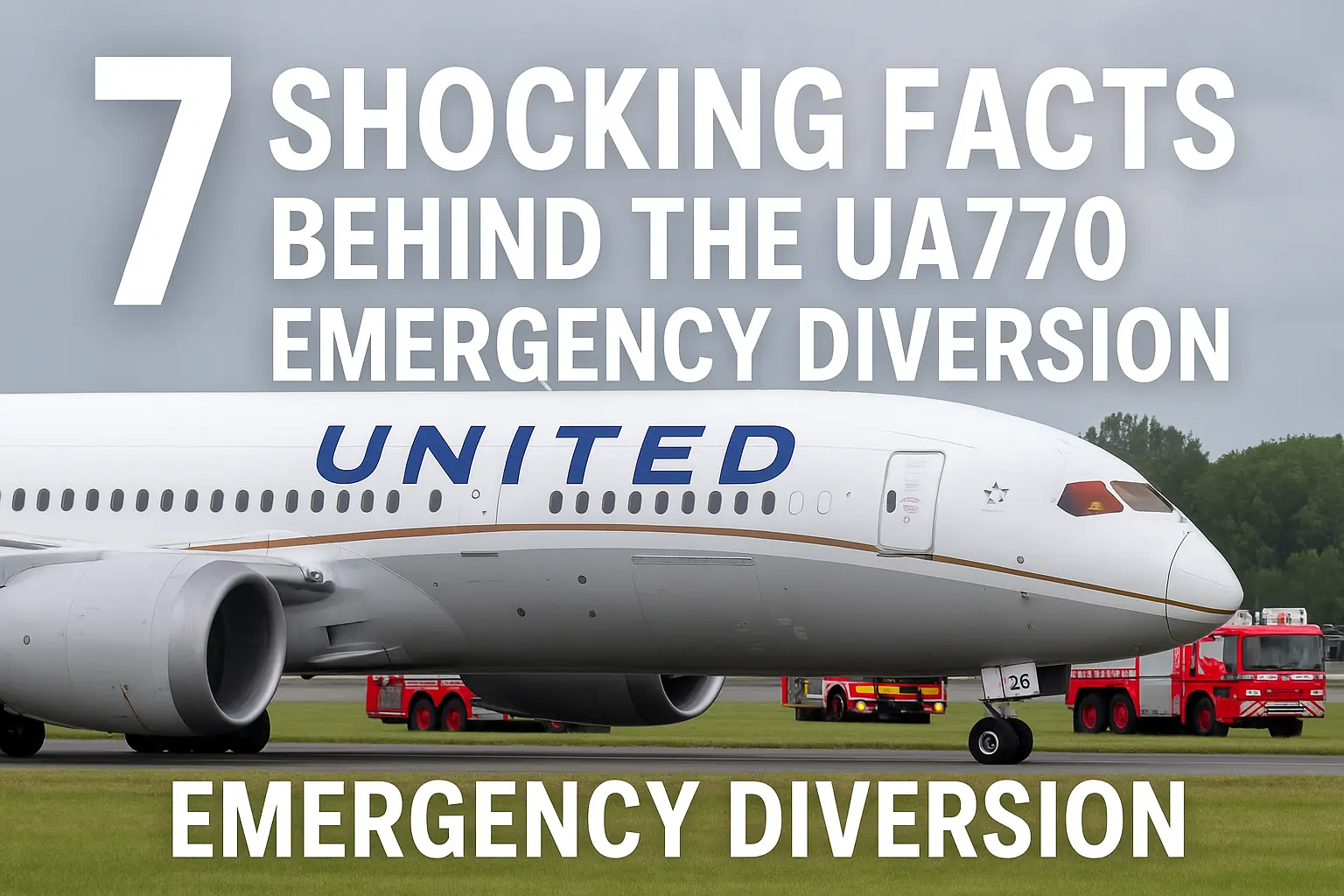
United Airlines Flight UA770 started out like any normal flight. Passengers boarded, found their seats, and prepared for a regular trip. But later in the flight, something unexpected happened. A warning light came on in the cockpit, and the pilots had to make an important safety choice. Because of this alert, the flight made an emergency diversion and landed at a different airport than planned.
Even though the situation sounded scary, the crew handled it smoothly, and the plane landed safely with no injuries. This article explains what happened, why the diversion took place, how passengers felt, and what we can learn from the event all in simple and clear English.
1. Basic Flight Information “United Airlines Flight UA770 Emergency Diversion”
Below is a simple table showing the main details of the incident:
| Detail | Information |
|---|---|
| Airline | United Airlines |
| Flight Number | UA770 |
| Incident Type | Emergency diversion |
| Reason | Warning about a possible pressurization or system issue |
| Result | Safe landing, no injuries |
The aircraft was a large United Airlines plane used on long flights. These planes have many computers and sensors to help monitor everything in real time.
2. What Went Wrong?
During the flight, the pilots saw a warning signal on their screens. This signal suggested there could be a problem with the plane’s pressurization system or another part of the environmental control system. Pressurization is what keeps the air inside the cabin safe and comfortable at high altitudes.
Possible reasons for the alert
-
A sensor giving wrong information
-
A valve not working correctly
-
A small mechanical part acting strangely
-
A computer noticing something unusual
-
A real change in cabin pressure
Even if the warning is small, pilots must treat it seriously
See More: Delta Flight DL275 Diverted to LAX: Full Event Report
3. How the Pilots Responded
Pilots are trained to act quickly and calmly when a warning appears. They follow a checklist and talk to air-traffic control right away.
Steps the pilots took
-
Checked the message on their screens
-
Looked at backup systems to confirm the problem
-
Spoke with United’s operations team on the ground
-
Told air-traffic control there might be an emergency
-
Decided the safest thing was to land as soon as possible
Because the warning involved pressurization, the safest choice was to divert the flight.
4. How Pilots Choose a Diversion Airport
Choosing where to land is an important decision. Pilots do not pick an airport at random. They use many factors to choose the safest location.
What pilots think about when choosing a diversion airport
-
Is the runway long enough for a big plane?
-
Does the airport have good emergency services?
-
Are weather conditions safe for landing?
-
Does the airport have airplane maintenance crews?
-
How close is the airport?
Here is a simple table comparing good and bad airports for emergencies:
| Factor | Good Airport | Bad Airport |
|---|---|---|
| Runway length | Very long | Too short |
| Fire and rescue | Strong emergency team | Small or limited support |
| Weather | Clear skies | Storms or fog |
| Maintenance | Can fix big planes | Only small aircraft support |
The pilots of UA770 chose a large international airport with strong safety services and long runways.
5. The Emergency Descent and Landing
After deciding to divert, the pilots began to lower the plane to a safer altitude. This is normal when there might be a pressurization problem. Lower altitude reduces any possible risk.
What happens in an emergency descent
-
The plane slowly goes down to a safer height
-
Seatbelt signs stay on
-
Crew asks everyone to remain calm
-
Pilots talk often with air-traffic control
-
The plane gets priority to land first
When UA770 landed, emergency vehicles such as fire trucks were waiting nearby — not because something was burning, but as a standard safety rule. The landing was smooth, and no one was hurt.
6. What Passengers Experienced
Different passengers felt different emotions. Some were nervous, but many were impressed with how calm the staff stayed.
Common passenger feelings
-
Confusion when the plane started descending
-
Anxiety after hearing about an emergency landing
-
Relief when the crew explained things clearly
-
Gratitude after the safe landing
How the cabin crew helped
-
Made clear and simple announcements
-
Walked through the cabin to check on people
-
Answered questions when safe to do so
-
Helped people stay calm
-
Guided everyone after landing
After the plane landed, passengers were given new flights or helped with hotel stays if needed.
7. What Happened After Landing
Once everyone was off the plane, United’s maintenance team inspected the aircraft. They needed to find out exactly what caused the warning.
Checklist engineers follow
-
Test the pressurization system
-
Check valves and sensors
-
Look at the aircraft’s computer logs
-
Inspect the outside of the plane
-
Make sure no other systems were affected
-
Replace or repair faulty parts
The plane can only fly again once all tests are complete and approved by certified engineers.
8. Why This Event Is Important
Even though UA770 landed safely, the incident still matters. It shows how seriously airlines take safety.
Key lessons
-
Better safe than sorry: even small alerts get big attention.
-
Modern planes are very smart: they detect problems early.
-
Pilots train for emergencies often: so they stay calm and prepared.
-
Diversions protect passengers: even if they cause delays.
-
Investigations help improve safety: each event helps make future flights safer.
9. What This Shows About Airline Safety
Events like this remind us that flying is safe not because nothing ever goes wrong, but because so many layers of protection are in place.
Layers of aviation safety
-
Smart aircraft systems
-
Highly trained pilots
-
Skilled cabin crew
-
Air-traffic control support
-
Airport emergency teams
-
Maintenance experts
-
Government safety rules
All these parts work together to keep passengers safe at all times.
10. Conclusion
The emergency diversion of United Airlines Flight UA770 is a good example of how well the aviation safety system works. A warning appeared, the pilots followed their training, the crew helped passengers stay calm, and the plane landed safely at a suitable airport.
Although passengers felt nervous, they also saw firsthand how prepared airline crews are for unexpected events. The important message is simple: when something seems unusual, airlines choose safety over everything else.
UA770’s diversion ended with no injuries, a safe landing, and a chance for the airline to study the issue and make future flights even safer. It is a reminder that even when things go wrong, the aviation system is strong, prepared, and focused on protecting everyone onboard.
