
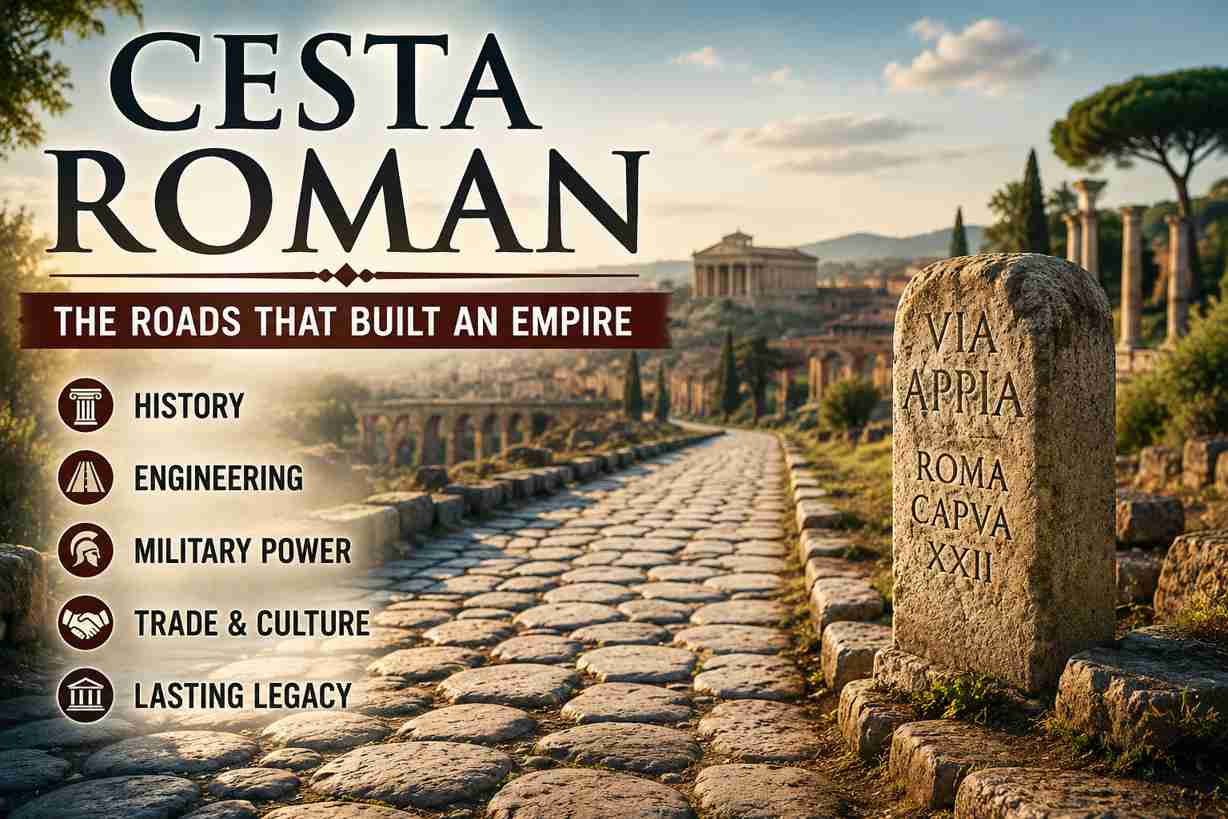
Cesta Roman is a term that attracts the attention of people interested in Roman history, ancient engineering, and cultural heritage. While the phrase may have different meanings depending on the context, it is most commonly associated with the remarkable road system built by the Roman Empire. These roads connected distant regions, supported trade, helped military operations, and played a major role in the growth of one of history’s most powerful civilizations.
Today, Roman roads are considered one of the greatest engineering achievements of the ancient world. Many sections remain visible after nearly two thousand years, demonstrating the skill and planning of Roman engineers.
This guide explores the meaning of Cesta Roman, the history of Roman roads, their construction methods, famous routes, and the lasting influence they continue to have on modern transportation systems.
What Does Cesta Roman Mean?
The term “Cesta Roman” is generally linked to Roman roads and infrastructure. In some cases, it may also refer to Cesta Tower, a historic fortress in San Marino. However, when people search for the term online, they are usually looking for information about Roman roads and the legacy of Roman engineering.
Quick Overview
| Topic | Description |
|---|---|
| Origin | Ancient Roman Empire |
| Main Association | Roman roads and transportation |
| Historical Purpose | Military, trade, and communication |
| Time Period | Approximately 312 BCE onward |
| Modern Importance | Engineering, tourism, and history |
Understanding Roman roads helps explain how the Roman Empire expanded across Europe, North Africa, and parts of Asia.
The Rise of the Roman Empire and the Need for Roads
As Rome expanded its territory, it needed a reliable way to move soldiers, goods, and information. Large empires cannot function effectively without transportation networks, and the Romans understood this better than most ancient civilizations.
Before Roman roads, travel was often slow and difficult. Dirt tracks became muddy during rain and dangerous during winter months. The Romans solved this problem by creating a structured road network that connected major cities, military camps, ports, and trading centers.
Why Romans Built Roads
The Roman government invested heavily in road construction because it provided many benefits:
- Faster movement of military forces
- Better communication between regions
- Easier transportation of goods
- Stronger political control
- Increased economic activity
- Improved trade opportunities
These advantages helped Rome become one of the most successful empires in history.
How Roman Roads Were Built
One reason Roman roads became famous is their durability. Unlike simple dirt paths, Roman roads were carefully designed and built using several layers of materials.
Step-by-Step Construction Process
Roman engineers followed a systematic process:
- Survey the route
- Clear the land
- Dig a trench
- Build a solid foundation
- Add layers of stone and gravel
- Place paving stones on top
- Install drainage systems
The goal was to create a road that could withstand heavy use for many years.
Materials Used in Roman Roads
| Material | Purpose |
|---|---|
| Large Stones | Foundation support |
| Crushed Stone | Stability |
| Gravel | Drainage and strength |
| Sand | Filling gaps |
| Paving Slabs | Durable road surface |
This layered design helped roads resist damage from weather and heavy traffic.
Engineering Features That Made Roman Roads Unique
Roman roads were far more advanced than many other roads of the ancient world.
Key Features
- Straight routes whenever possible
- Strong stone foundations
- Effective drainage systems
- Standardized construction methods
- Road markers called milestones
- Bridges over rivers
- Carefully planned routes
Why These Features Mattered
| Feature | Benefit |
|---|---|
| Drainage | Reduced water damage |
| Straight Routes | Faster travel |
| Stone Surface | Greater durability |
| Milestones | Easier navigation |
| Standard Design | Simplified maintenance |
These innovations helped Roman roads remain functional for centuries.
Famous Roman Roads That Shaped History
The Roman Empire developed thousands of miles of roads. Some became especially important due to their military and economic value.
Via Appia
Known as the “Queen of Roads,” Via Appia connected Rome to southern Italy. It became one of the most important transportation routes in the empire.
Via Aurelia
This road followed the western coast of Italy and connected several important settlements.
Via Flaminia
Via Flaminia linked Rome with northern Italy and played a key role in trade and military movement.
Via Egnatia
Located in the Balkans, this route connected parts of Europe with the eastern territories of the empire.
Comparison of Major Roman Roads
| Road | Region | Main Purpose |
|---|---|---|
| Via Appia | Italy | Military and trade |
| Via Aurelia | Coastal Italy | Regional transport |
| Via Flaminia | Northern Italy | Commerce and communication |
| Via Egnatia | Balkans | International trade |
The Importance of Roman Roads
Roman roads did much more than connect cities. They helped shape Roman society and contributed to the empire’s long-term success.
Military Benefits
The Roman army could travel quickly across vast distances. This allowed Rome to defend its borders and respond to threats efficiently.
Economic Benefits
Merchants used the roads to transport products such as:
- Grain
- Olive oil
- Wine
- Textiles
- Metals
- Pottery
Trade became faster and more profitable because transportation was more reliable.
Communication Benefits
Government officials, messengers, and travelers could move information more quickly than before.
Social Benefits
Roads encouraged cultural exchange between different regions and communities throughout the empire.
Roman Roads vs Modern Roads
Many modern road-building principles can be traced back to Roman engineering.
| Roman Roads | Modern Roads |
|---|---|
| Built with stone | Built with asphalt and concrete |
| Hand construction | Machine construction |
| Designed for military and trade | Designed for all transportation |
| Limited traffic volume | High traffic volume |
| Manual maintenance | Modern maintenance systems |
Although technology has changed, many of the basic ideas remain similar.
The Lasting Legacy of Roman Roads
Roman roads influenced transportation long after the fall of the Roman Empire.
Modern Impact
Today, Roman engineering principles continue to inspire:
- Highway design
- Infrastructure planning
- Urban development
- Transportation management
Many modern roads in Europe follow routes first established by Roman engineers.
Why Roman Roads Still Matter
Roman roads teach valuable lessons about:
- Long-term planning
- Durable construction
- Efficient transportation
- Infrastructure management
These lessons remain relevant for engineers and city planners today.
Cesta Tower and Its Historical Connection
Another interpretation of Cesta Roman relates to Cesta Tower, one of the most famous landmarks in San Marino.
What Is Cesta Tower?
Cesta Tower stands on Mount Titano and forms part of San Marino’s historic defensive system.
Key Features
- Medieval architecture
- Historical museum
- Ancient weapons collection
- Scenic views of the surrounding landscape
Visitor Information
| Feature | Description |
|---|---|
| Location | Mount Titano, San Marino |
| Type | Historic fortress |
| Attraction | Museum and viewpoints |
| Importance | Cultural heritage landmark |
Although different from Roman roads, Cesta Tower contributes to the broader historical interest surrounding the term.
Interesting Facts About Roman Roads
- The Roman road network stretched for tens of thousands of miles.
- Some Roman roads are still visible today.
- Milestones helped travelers measure distance.
- Roman engineers prioritized durability over speed of construction.
- Many European roads follow ancient Roman routes.
These facts highlight the remarkable achievements of Roman civilization.
Conclusion
Cesta Roman represents an important part of ancient history. Whether discussing the famous Roman road network or the historic Cesta Tower, the term reflects the achievements of civilizations that valued planning, engineering, and long-term development. Roman roads helped unite a vast empire, encouraged trade, strengthened military operations, and laid the foundation for many transportation systems used today. Their influence continues to be seen across Europe and remains a powerful example of human innovation and practical design.
Frequently Asked Questions
What does Cesta Roman mean?
It is generally associated with Roman roads and their historical importance, although it may also refer to Cesta Tower in San Marino.
Why were Roman roads important?
They supported military movement, trade, communication, and administration throughout the Roman Empire.
How long did Roman roads last?
Many Roman roads lasted for centuries, and some sections remain visible today.
What materials were used to build Roman roads?
Romans commonly used stone, gravel, sand, and paving slabs arranged in multiple layers.
Which Roman road was the most famous?
Via Appia is often considered the most famous Roman road because of its historical importance.
Are Roman roads still used today?
Some ancient routes influenced modern roads, and certain original sections remain accessible to visitors.
What is Cesta Tower?
Cesta Tower is a historic fortress located on Mount Titano in San Marino.
Why is Roman engineering still admired?
Roman engineers created durable infrastructure that influenced construction methods for centuries.
