
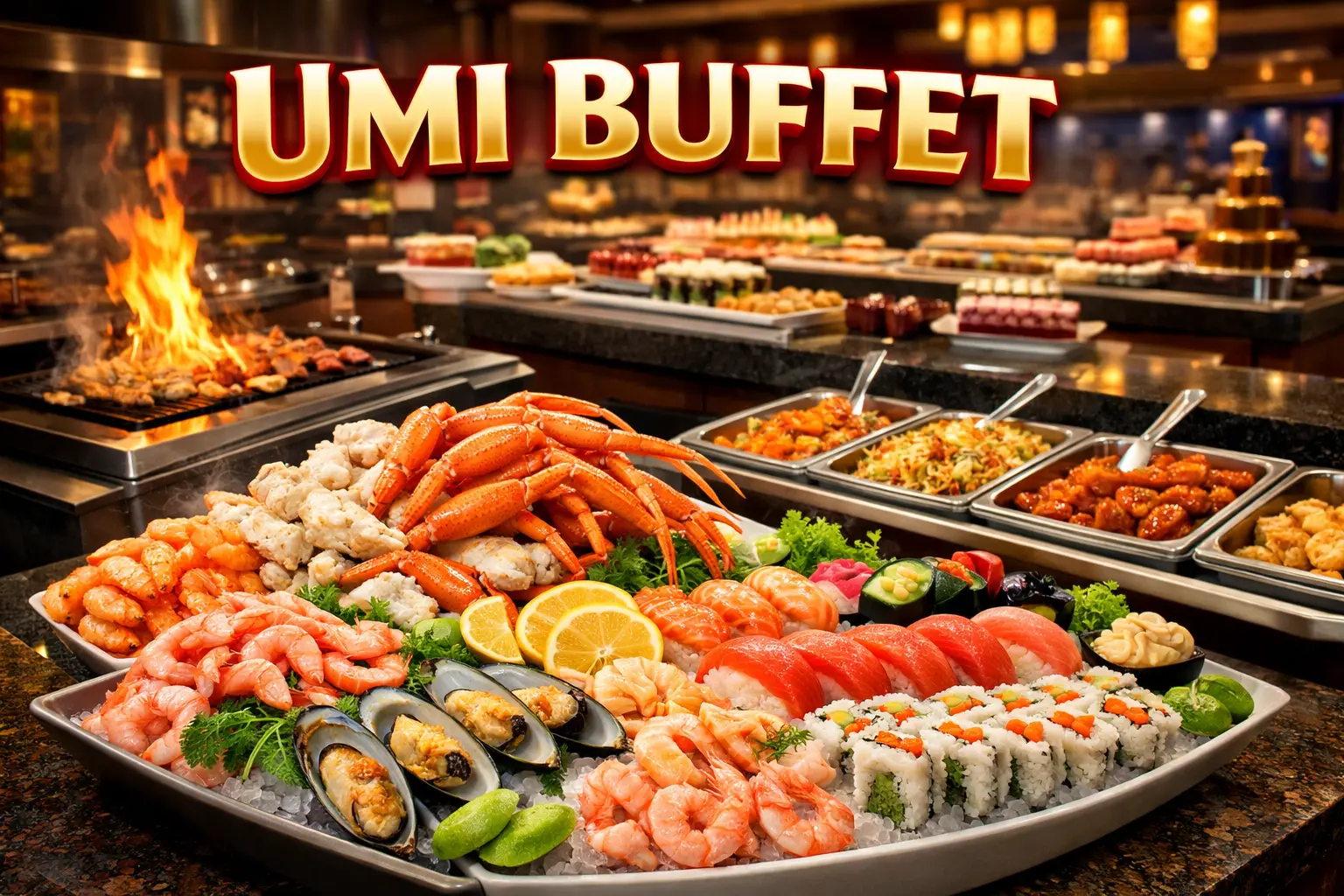
Umi Buffet refers to a full scale Asian buffet restaurant model that combines seafood-forward offerings, pan-Asian cooked cuisine, sushi preparation, and high volume service operations under a single fixed-price dining structure. Public restaurant records, menu disclosures, and local business listings identify Umi Buffet as a dine-in buffet brand operating primarily in the United States, with independent ownership structures across locations rather than a single centralized franchise system.
Umi Buffet is known for presenting variety density. Variety density describes the number of distinct menu items offered within one service period. Buffet industry benchmarks classify Umi Buffet within the “large-format Asian seafood buffet” category due to its menu breadth, floor layout, and ingredient sourcing patterns.
How Umi Buffet Differs From Standard Buffet Restaurants
Umi Buffet differs from conventional buffet restaurants through cuisine integration, seafood emphasis, and station specialization. Industry analysis from the National Restaurant Association confirms that Asian seafood buffets allocate more operational resources to protein handling and cold-bar compliance than American-style buffets.
Umi Buffet integrates Chinese-American entrées, Japanese-style sushi, live hibachi cooking, and shellfish service within one continuous service model. This integration reduces menu monotony while increasing guest dwell time.
Core Menu Structure at Umi Buffet
Hot Entrée Selection
Hot entrées form the operational backbone of Umi Buffet. These items are prepared in batch volumes and replenished continuously.
Common hot entrée categories include:
-
Breaded poultry dishes with regional Chinese sauces
-
Stir-fried beef and vegetable combinations
-
Noodle-based dishes using wheat or rice noodles
-
Fried rice variations with mixed proteins
Each dish follows standardized buffet-holding protocols governed by FDA Food Code temperature requirements.
Seafood-Focused Offerings
Seafood defines brand recognition for Umi Buffet. Menu documentation and customer reviews consistently identify seafood as the primary value driver.
Seafood items typically include:
-
Snow crab legs during dinner service
-
Shell-on shrimp prepared boiled or fried
-
Mussels and clams cooked with garlic-based sauces
-
White fish fillets baked or battered
Seafood availability varies by location due to supplier contracts and seasonal pricing.
See More: Crocolini: A Simple and Complete Guide
Sushi and Cold Bar Stations
Sushi stations differentiate Umi Buffet from traditional Asian buffets. Sushi items are prepared using approved frozen fish sources and cooked seafood components.
Sushi formats commonly include:
-
California-style rolls
-
Vegetable rolls
-
Tempura shrimp rolls
-
Nigiri using cooked fish
Cold bar placement supports temperature compliance and visual presentation.
Hibachi Grill Experience
Hibachi stations provide made-to-order service. Guests select raw ingredients, and trained cooks prepare meals on flat-top grills.
Hibachi stations improve perceived freshness and reduce plate waste by allowing portion control.
Umi Buffet Pricing Model Explained
Umi Buffet pricing follows a tiered structure based on service period and day of the week. Pricing transparency aligns with buffet industry standards.
Typical Pricing Framework
| Service Period | Price Range | Key Inclusions |
|---|---|---|
| Lunch | Lower tier | Limited seafood, hot entrées |
| Dinner | Higher tier | Crab legs, expanded sushi |
| Children | Reduced | Age-based pricing |
Pricing reflects ingredient cost variability and labor intensity.
Food Safety and Quality Control at Umi Buffet
Umi Buffet adheres to local health department regulations and FDA Food Code standards. Health inspection reports confirm that buffet lines require additional monitoring due to open food exposure.
Safety Protocols in Use
-
Maintain hot foods above 135°F
-
Hold cold foods below 41°F
-
Replace utensils at scheduled intervals
-
Sanitize contact surfaces regularly
Compliance ensures operational continuity and public trust.
Ingredient Sourcing and Supply Chain
Umi Buffet sources ingredients from regional wholesale distributors specializing in bulk foodservice supply. Seafood items are typically frozen at origin to comply with parasite destruction requirements for sushi-grade fish.
Centralized distributor sourcing enables:
-
Menu consistency
-
Cost predictability
-
Volume-based purchasing
Produce and dry goods are sourced locally when possible to reduce transit time.
Dining Layout and Guest Flow Design
Umi Buffet locations use centralized buffet layouts to manage guest movement and reduce congestion. Design research in high-volume dining confirms that logical food station sequencing improves customer satisfaction.
Common Layout Order
-
Appetizers and soups near entry
-
Hot entrées in central aisles
-
Sushi and hibachi stations separated
-
Desserts positioned near exits
This layout minimizes cross traffic and improves service speed.
Nutritional and Dietary Considerations
Umi Buffet menus include vegetarian-friendly items such as stir-fried vegetables, rice dishes, and tofu preparations. However, gluten-containing ingredients are prevalent due to soy sauce and breading use.
Allergen awareness signage is commonly displayed near buffet stations to meet regulatory disclosure expectations.
Operational Staffing Model
Umi Buffet staffing models emphasize kitchen labor over front-of-house service. Servers focus on beverage service and table maintenance rather than order taking.
Key staffing roles include:
-
Buffet line cooks
-
Sushi preparers
-
Hibachi chefs
-
Bussing and sanitation teams
This structure supports high guest volume with reduced per-table labor.
Customer Volume and Peak Hours
Peak traffic occurs during weekend dinner service. Umi Buffet manages volume through seating density optimization and rapid table clearing.
Operational data from buffet management studies shows that table turnover rates directly influence revenue per square foot.
Sustainability and Waste Management Practices
Umi Buffet reduces food waste through batch cooking, demand forecasting, and controlled replenishment. Some locations participate in recycling and composting programs where local regulations allow.
Waste monitoring improves margin control and operational efficiency.
Competitive Positioning of Umi Buffet
Umi Buffet occupies a niche between casual dining and premium seafood buffets. The combination of sushi, hibachi, and crab legs positions it competitively against both traditional Chinese buffets and higher-priced seafood restaurants.
Brand differentiation relies on perceived abundance rather than luxury branding.
See More: Platform Sandals: Simple Guide, Styles, and How to Wear Them
Umi Buffet vs Standard Asian Buffet
| Feature | Umi Buffet | Standard Asian Buffet |
|---|---|---|
| Seafood Variety | High | Moderate |
| Sushi Station | Yes | Limited |
| Hibachi Grill | Yes | Rare |
| Price Tier | Mid-range | Low to mid |
| Menu Rotation | Frequent | Limited |
Frequently Asked Questions About Umi Buffet
What makes Umi Buffet unique?
Umi Buffet is defined by seafood volume, sushi availability, and hibachi integration within one buffet experience.
Does Umi Buffet serve raw fish?
Umi Buffet serves sushi prepared from frozen-at-origin fish that meets food safety standards.
Is Umi Buffet suitable for families?
Umi Buffet accommodates families through varied menu options and child pricing tiers.
Are menu items the same at every location?
Menu structure remains consistent, but specific items vary based on supplier availability.
How long can guests dine at Umi Buffet?
Dining time limits vary by location and are enforced during peak periods.
Strategic Value of Umi Buffet in the Restaurant Market
Umi Buffet represents a scalable, high-volume dining model optimized for variety-seeking customers. Its operational success depends on supply chain efficiency, food safety compliance, and consistent menu execution. Market positioning data confirms that Umi Buffet attracts repeat traffic through perceived value rather than brand exclusivity.
This balance of operational discipline and menu abundance defines the long-term viability of the Umi Buffet concept in competitive dining markets.
Conclusion:
Umi Buffet represents a complete Asian seafood buffet experience built around variety, value, and operational consistency. The dining model combines hot entrées, sushi stations, hibachi grilling, and seafood service within a single fixed-price structure. Umi Buffet maintains relevance through menu density, controlled replenishment, and standardized food safety practices. The concept appeals to high-volume dining preferences without compromising selection breadth. Umi Buffet continues to stand out as a defined category leader in the modern buffet restaurant landscape.
