
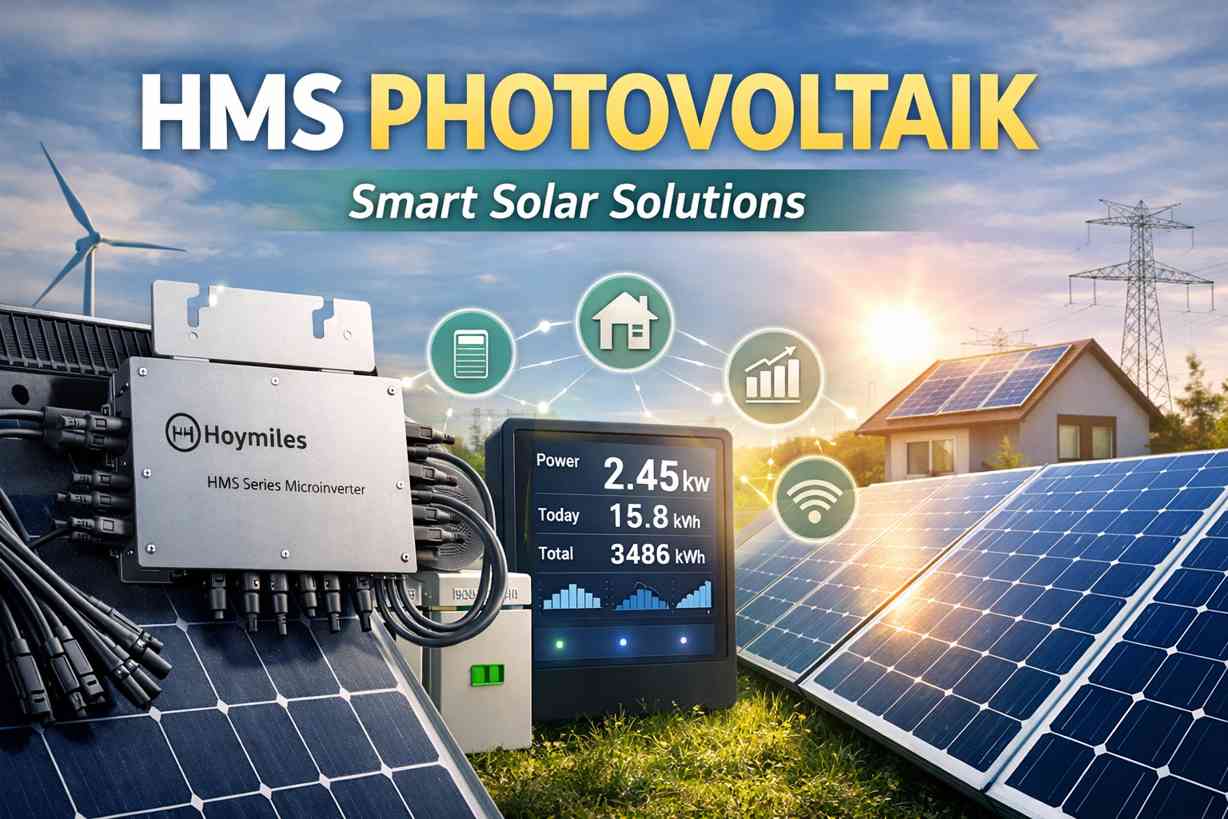
HMS Photovoltaik is a term often used for modern solar systems. Many people search for it, but the meaning is not always clear. The reason is simple: the term is used in two related ways.
-
It can mean a smart photovoltaic (PV) system with monitoring and control.
-
It can also mean the Hoymiles HMS microinverter series.
Both meanings are common, especially in Europe. This article explains HMS Photovoltaik in simple words. It shows how the system works, what the benefits are, and who should use it.
What Does HMS Photovoltaik Mean?
HMS Photovoltaik is not an official technical standard. It is a general term used by users, blogs, and shops.
In most cases, HMS Photovoltaik refers to:
-
A smart solar system with monitoring and flexible design
-
Or the Hoymiles HMS microinverters, used in many small and home PV systems
Because Hoymiles HMS products are popular, many people use the term when they actually mean Hoymiles HMS microinverters.
HMS Photovoltaik as a Smart Solar System
When used as a system idea, HMS Photovoltaik describes a modern solar setup that focuses on control, safety, and good performance.
Main Parts of an HMS Photovoltaik System
A typical HMS-style PV system includes:
-
Solar panels
-
Microinverters or smart inverters
-
Monitoring software (app or web)
-
Optional battery storage
-
Grid connection with safety rules
Each solar panel works more independently than in older systems.
Main Benefits of a Smart HMS System
A smart HMS Photovoltaik system offers many benefits:
-
You can see power data in real time
-
The system works better with shade
-
Problems are easier to find
-
Energy yield is more stable
-
The system can grow later
This makes HMS Photovoltaik useful for homes, apartments, and small buildings.
Hoymiles HMS Microinverters Explained
The second and most common meaning of HMS Photovoltaik is the Hoymiles HMS series.
What Is the Hoymiles HMS Series?
Hoymiles HMS microinverters change DC power from solar panels into AC power.
This happens directly at each panel, not at one central inverter.
This is different from traditional string inverters.
Compared to older Hoymiles HM models, the HMS series offers:
-
Support for stronger solar panels
-
More MPPT channels
-
Better system design
-
Easy system expansion
Popular Hoymiles HMS Models
| Model | Number of Panels | Typical Use | Good For |
|---|---|---|---|
| HMS-800 | 2 panels | Balcony solar | Apartments |
| HMS-1600 | 4 panels | Small roof | Houses |
| HMS-2000-4T | 4 panels | Larger roof | Complex roofs |
Each panel has its own control, so one weak panel does not reduce the whole system.
Key Technical Features of HMS Photovoltaik
HMS Photovoltaik systems usually include these features:
-
MPPT for each panel
-
Monitoring by app or web
-
High safety standards
-
Automatic shutdown functions
-
Good efficiency in daily use
These features help users get more power and better system control.
See Also: Jeroen Dik: A Simple Look at His Work, Racing, and Engineering Style
Installation and Compatibility
HMS Photovoltaik is known for easy installation.
Common Installation Types
-
Balcony solar systems (Balkonkraftwerk)
Small systems for apartments and renters. -
Home rooftop systems
Good for roofs with shade or different angles. -
Small business systems
Useful for shops and offices.
Installation Advantages
-
No long panel strings
-
Simple system planning
-
Easy system extension
-
One panel problem does not stop others
Local grid rules still apply. Registration may be required.
Advantages and Disadvantages of HMS Photovoltaik
Advantages
-
Better performance with shade
-
Panel-level monitoring
-
High system safety
-
Easy to expand later
-
Good for small and mixed roofs
Disadvantages
-
Higher cost at the start
-
More parts on the roof
-
Compatibility must be checked
Many users accept the higher price because of better control and flexibility.
HMS Photovoltaik vs Traditional PV Systems
The main difference is how power is converted.
| Feature | HMS Photovoltaik | Traditional PV |
|---|---|---|
| Inverter type | Microinverter | String inverter |
| Shade effect | Low | High |
| Monitoring | Per panel | Whole system |
| Expansion | Easy | Limited |
| Start cost | Higher | Lower |
Traditional systems are still useful for large roofs with no shade.
HMS Photovoltaik is better for complex situations.
Who Should Use HMS Photovoltaik?
HMS Photovoltaik is a good choice for:
-
Apartment owners
-
Balcony solar users
-
Homeowners with shade
-
DIY solar users
-
People who want system data
-
Users who plan future expansion
It may not be ideal if lowest price is the only goal.
Read Also: Seekde: What It Is and Why People Are Talking About It
Frequently Asked Questions (FAQ)
What does HMS mean in photovoltaics?
It usually means smart and monitored solar systems or the Hoymiles HMS series.
Is HMS Photovoltaik allowed in Europe?
Yes. Hoymiles HMS products meet EU rules.
Can HMS systems work with batteries?
Yes, with the right setup.
Can I add more panels later?
Yes. HMS systems are easy to expand.
What is the difference between HM and HMS?
HMS supports higher power panels and newer features.
Conclusion
HMS Photovoltaik stands for modern and flexible solar power. It combines smart design, safety, and monitoring.
Whether you see it as a system idea or as the Hoymiles HMS microinverter series, the goal is the same:
-
Better energy use
-
More control
-
Easy system growth
For many homes, apartments, and small solar systems, HMS Photovoltaik is a strong and future-ready solution.
