
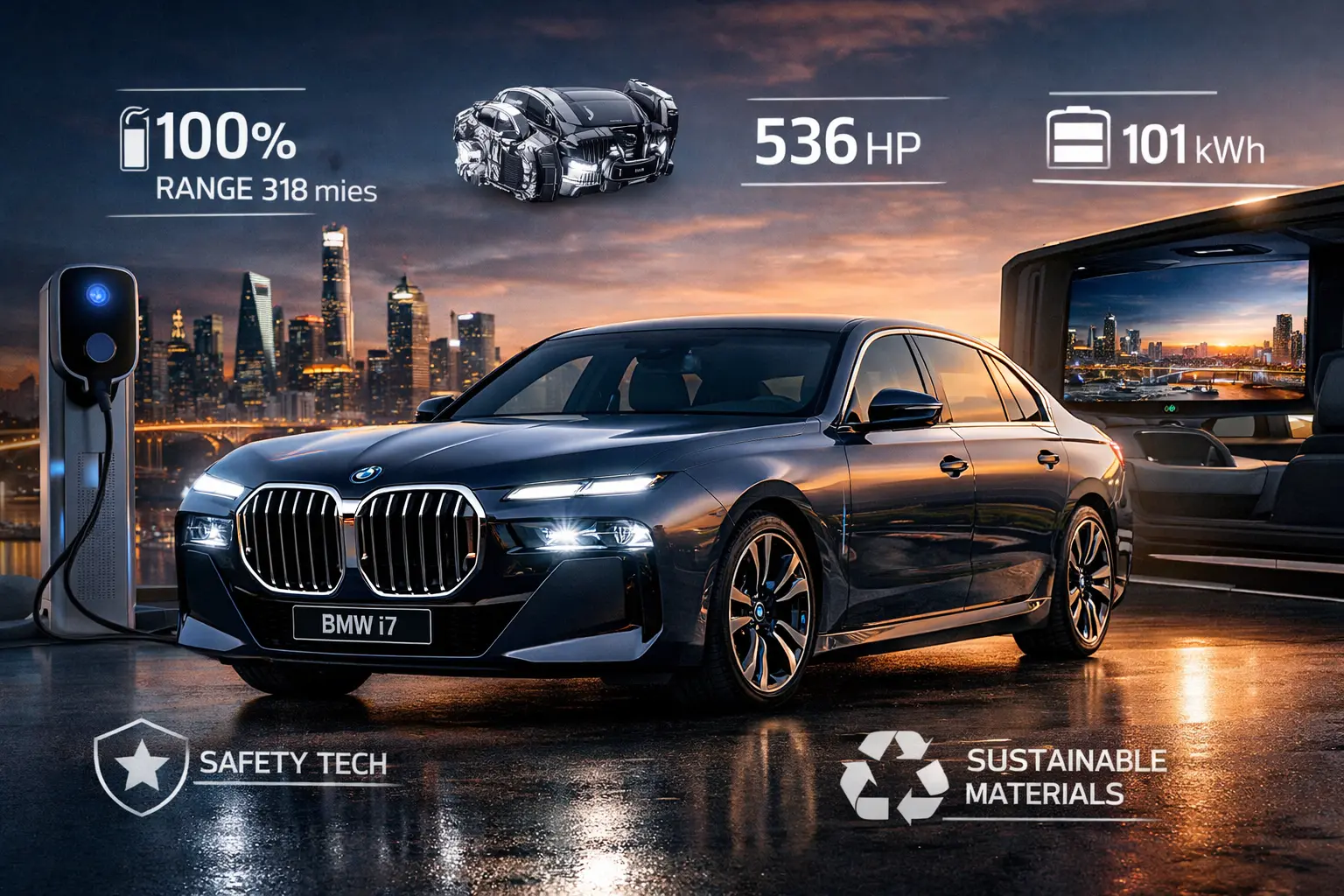
The BMW i7 is BMW’s flagship fully electric luxury sedan. According to BMW Group product documentation, the BMW i7 represents the electric counterpart of the BMW 7 Series and defines the brand’s highest level of electrified comfort, technology, and performance. The BMW i7 operates exclusively on battery power and integrates premium design with advanced digital systems.
What Makes the BMW i7 Different From Other Electric Sedans
Flagship Electric Identity
The BMW i7 functions as the top-tier electric model in BMW’s global lineup. According to BMW AG, the vehicle combines long-wheelbase luxury proportions with zero-emission mobility. The BMW i7 differs from mid-size electric sedans by prioritizing rear-seat experience, ride isolation, and digital immersion.
Platform and Engineering Foundation
The BMW i7 is built on BMW’s Cluster Architecture (CLAR). According to BMW engineering disclosures, CLAR enables flexible drivetrain integration while maintaining torsional rigidity and safety standards. The platform supports large battery packaging without compromising cabin space.
BMW i7 Exterior Design Breakdown
Proportions and Body Structure
The BMW i7 uses a long-wheelbase sedan configuration. According to BMW design specifications, the extended length improves rear passenger comfort and aerodynamic stability. The hood length and upright stance reinforce flagship presence.
Signature Design Elements
The BMW i7 incorporates an illuminated kidney grille, split LED headlamps, flush door handles, and aerodynamic wheels. According to BMW aerodynamic testing data, these features reduce drag and contribute to driving efficiency.
See More: Meaimee 3: Simple Guide to Features, Uses, Pricing, and Benefits
BMW i7 Interior and Cabin Architecture
Material Selection and Craftsmanship
The BMW i7 interior uses leather-free sustainable materials, fine wood trims, and metallic accents. According to BMW sustainability reports, recycled polymers and responsibly sourced materials reduce environmental impact without reducing tactile quality.
Seating and Space Optimization
The BMW i7 offers executive rear seating with power recline, heating, ventilation, and massage. According to BMW dimensional data, rear legroom exceeds most electric luxury competitors due to the long wheelbase layout.
BMW i7 Digital Ecosystem and Infotainment
BMW Operating System 8
The BMW i7 runs BMW Operating System 8. According to BMW software architecture documentation, the system integrates navigation, vehicle controls, and entertainment into a unified interface. Over-the-air updates maintain long-term software relevance.
Rear-Seat Theatre Experience
The BMW i7 features a 31-inch 8K BMW Theatre Screen. According to BMW multimedia engineering data, the screen deploys electrically from the roof and integrates Amazon Fire TV functionality for streaming content.
BMW i7 Powertrain and Performance
Electric Motor Configuration
The BMW i7 xDrive60 uses dual electric motors. One motor drives the front axle. One motor drives the rear axle. According to BMW performance specifications, total system output reaches approximately 536 horsepower with high torque availability from standstill.
Acceleration and Driving Character
The BMW i7 accelerates from 0–60 mph in approximately 4.5 seconds. According to BMW testing data, power delivery remains smooth and linear to maintain ride comfort rather than aggressive sport tuning.
BMW i7 Battery, Range, and Efficiency
Battery System Overview
The BMW i7 uses a lithium-ion battery with a gross capacity of about 101.7 kWh. According to BMW battery engineering documentation, the pack is floor-mounted to optimize weight distribution and structural safety.
Driving Range Metrics
The BMW i7 delivers up to 318 miles of EPA-estimated range. According to EPA testing methodology, range varies based on climate, driving style, and load conditions.
BMW i7 Charging Capabilities
AC and DC Charging Support
The BMW i7 supports AC charging up to 11 kW and DC fast charging up to 195 kW. According to BMW charging performance data, the system is optimized for global charging infrastructure compatibility.
Charging Time Reference
The BMW i7 charges from 10% to 80% in approximately 34 minutes on a DC fast charger. According to BMW internal testing, 10 minutes of charging can add more than 100 miles of range under optimal conditions.
BMW i7 Ride Comfort and Handling Systems
Suspension and Chassis Technology
The BMW i7 includes adaptive air suspension as standard. According to BMW chassis development data, the system continuously adjusts damping forces to road conditions. Rear-axle steering enhances low-speed maneuverability.
Noise and Vibration Control
The BMW i7 uses acoustic glass and additional insulation layers. According to BMW NVH studies, cabin noise levels are significantly reduced compared to combustion-engine luxury sedans.
BMW i7 Safety and Driver Assistance
Active Safety Systems
The BMW i7 includes automatic emergency braking, blind-spot detection, lane-keeping assistance, and cross-traffic alerts. According to BMW safety documentation, these systems operate using radar, cameras, and ultrasonic sensors.
Assisted Driving Capabilities
The BMW i7 supports SAE Level 2 driver assistance. According to SAE definitions, the system provides steering and speed assistance while requiring driver supervision.
BMW i7 Sustainability and Manufacturing
Sustainable Production Practices
The BMW i7 is manufactured using renewable energy sources. According to BMW Group sustainability reports, aluminum used in the vehicle is produced with reduced carbon emissions.
Battery Recycling Strategy
BMW i7 batteries are designed for recyclability. According to BMW circular economy initiatives, recovered raw materials re-enter the production supply chain.
BMW i7 Competitor Comparison Table
| Feature | BMW i7 | Mercedes-Benz EQS | Tesla Model S |
|---|---|---|---|
| Body Type | Luxury Sedan | Luxury Sedan | Performance Sedan |
| Rear-Seat Focus | High | Medium | Low |
| Battery Capacity | ~101.7 kWh | ~107.8 kWh | ~100 kWh |
| Max Charging Speed | 195 kW | 200 kW | 250 kW |
| Interior Luxury | Ultra-Premium | Premium | Minimalist |
BMW i7 Key Advantages List
-
Delivers flagship-level rear-seat comfort
-
Integrates advanced digital entertainment systems
-
Maintains long driving range with efficient energy use
-
Uses sustainable materials and manufacturing processes
-
Provides smooth ride quality over performance bias
Ownership and Long-Term Value
Maintenance and Software Longevity
The BMW i7 relies on fewer mechanical components than combustion vehicles. According to BMW service data, reduced wear parts lower long-term maintenance complexity. Software updates extend feature relevance over time.
Brand Position and Resale Perception
BMW flagship models traditionally retain premium brand value. According to luxury vehicle market analysis, electric flagships with advanced technology maintain strong demand in secondary markets.
See More: Intelligent Message Filter: Simple Guide, Benefits, and Uses
Frequently Asked Questions About BMW i7
Is the BMW i7 fully electric?
Yes. The BMW i7 operates exclusively on battery power with no combustion engine.
What is the real-world range of the BMW i7?
Real-world range averages between 280 and 320 miles depending on driving conditions.
Does the BMW i7 support fast charging?
Yes. The BMW i7 supports DC fast charging up to 195 kW.
Is the BMW i7 focused on drivers or passengers?
The BMW i7 emphasizes rear-seat luxury while maintaining driver comfort and control.
Does the BMW i7 receive software updates?
Yes. The BMW i7 supports over-the-air software updates.
Conclusion:
The BMW i7 defines BMW’s electric luxury strategy. According to BMW Group product positioning, the model combines zero emission mobility with flagship comfort, advanced technology, and long-term digital adaptability. The BMW i7 stands as a benchmark for full-size electric luxury sedans in the global automotive market.
